Airtable can be used as an external data source through its Web API. This tutorial shows how to connect a PHPRunner or ASPRunner.NET application to Airtable and work with records through REST endpoints.
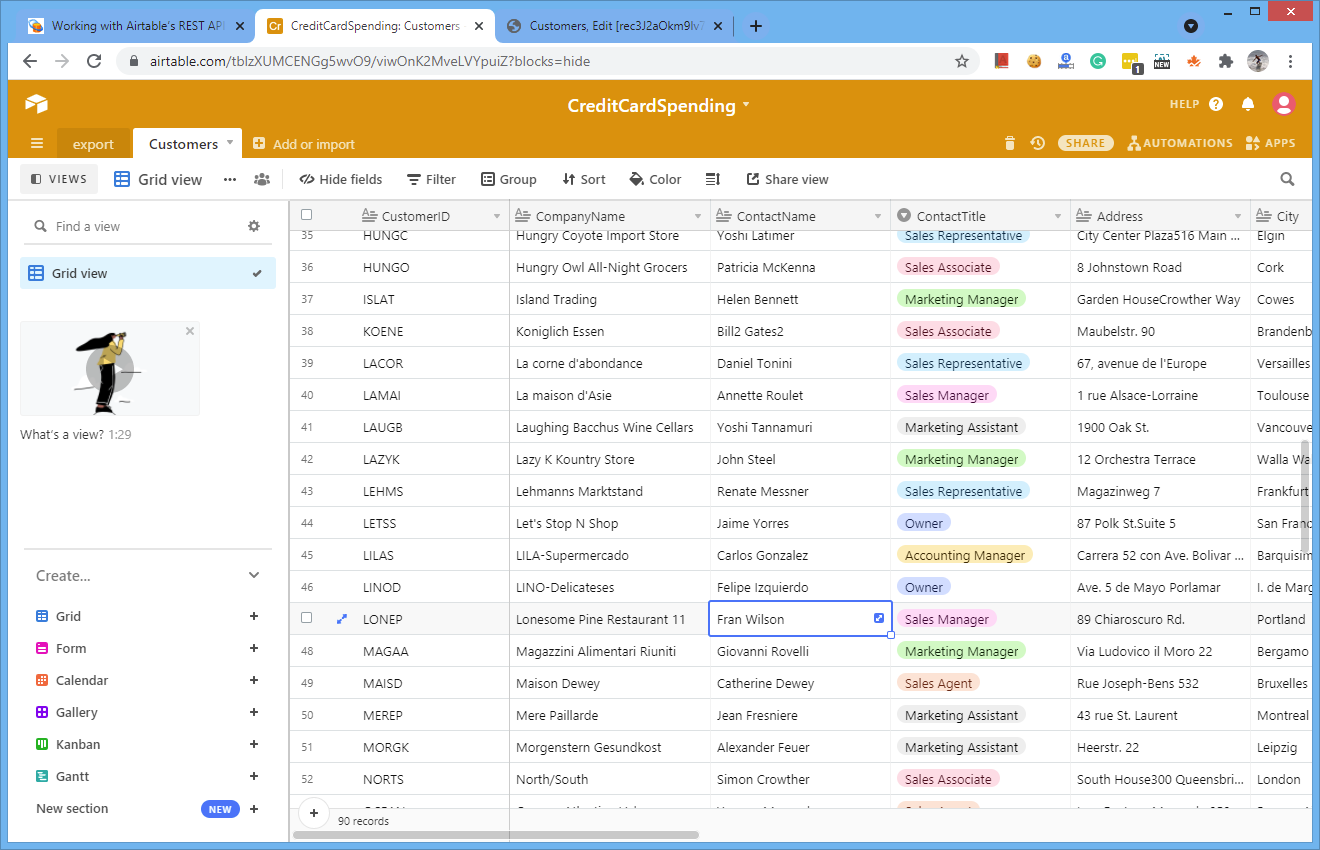
Updated August 2026: Airtable no longer supports the legacy user API keys used when this article was originally published. The setup below now uses a Personal Access Token.
With this connection you can retrieve Airtable records and also create, update and delete records from a generated PHPRunner or ASPRunner.NET application.
Airtable account setup
Before you start, create or open the Airtable base you want to use.
Airtable Web API requests now use a Personal Access Token (PAT). Open the Airtable Personal Access Tokens page and create a token for this integration.
For the examples in this article, the token needs access to the Airtable base you are connecting to and the appropriate record permissions. For a connection that both reads and modifies records, use the following scopes:
- data.records:read
- data.records:write
When creating the token, also add the specific Airtable base that the application should be allowed to access. Avoid granting access to unrelated bases unless the application actually needs them.
You will also need the Base ID. Airtable base IDs normally begin with app.
The Airtable Web API URL follows this format:
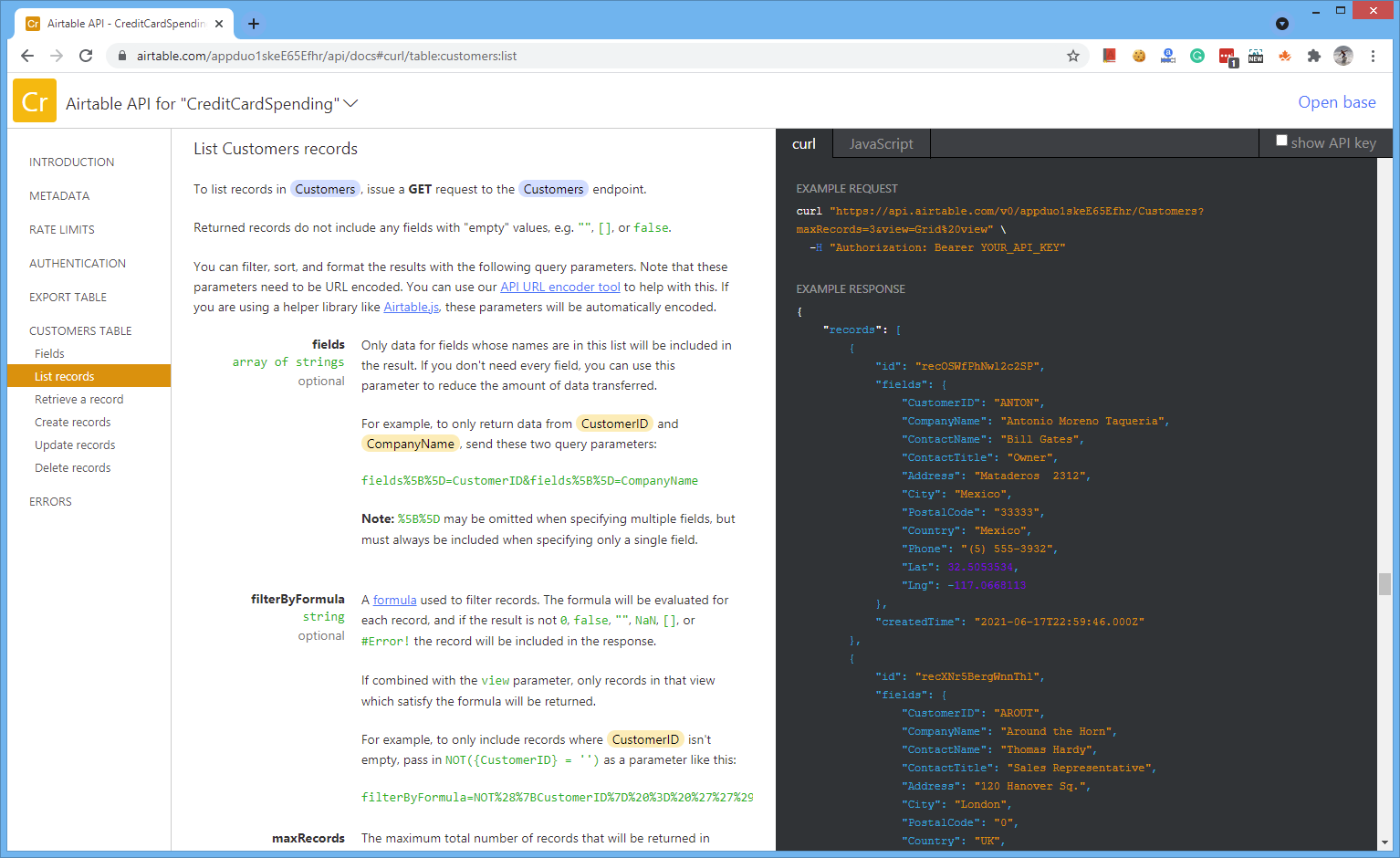
You can find your base ID and table information in Airtable’s Web API documentation.
The screenshot below comes from the original version of this tutorial. Airtable’s developer interface has changed, but the base/table information and sample API requests serve the same purpose.
PHPRunner / ASPRunner.NET setup
Create a REST API connection in your project.
For more information about REST API connections, see the PHPRunner REST API Connections documentation or the ASPRunner.NET REST API Connections documentation.
REST API connection
Use the following URL as the REST API connection URL:
Replace YOUR_BASE_ID with the ID of your Airtable base.
For authentication, configure the token so each request contains this HTTP header:
In the REST API connection settings, this can be configured as API Key authentication with the token sent in the HTTP header.
Do not place the Personal Access Token directly into application code or expose it to client-side JavaScript.
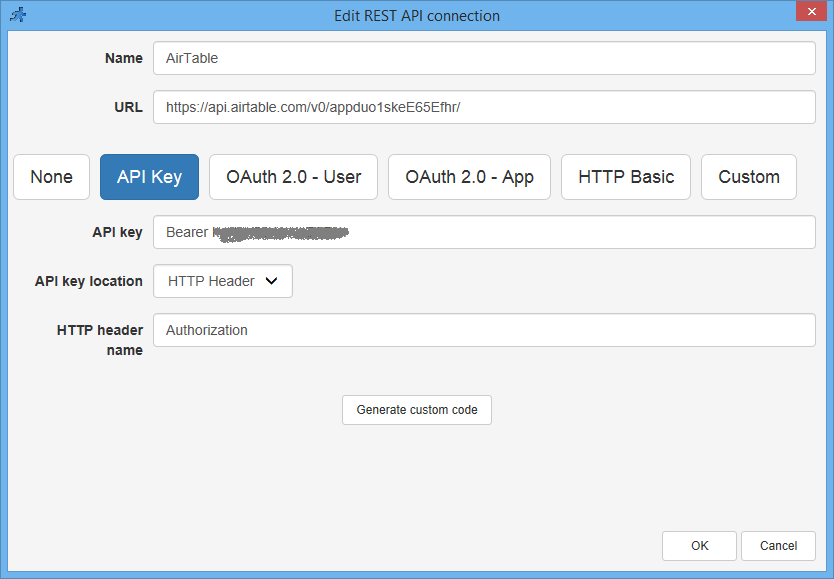
The screenshot above was created with the older Airtable API-key setup. The important difference today is that the value is a Personal Access Token, not a legacy Airtable API key.
List records
For the List operation, specify the Airtable table name as the Resource. For example:
The REST connection URL already contains the base ID, so the resulting request is equivalent to:
Run the request and add the fields you need to the REST view.
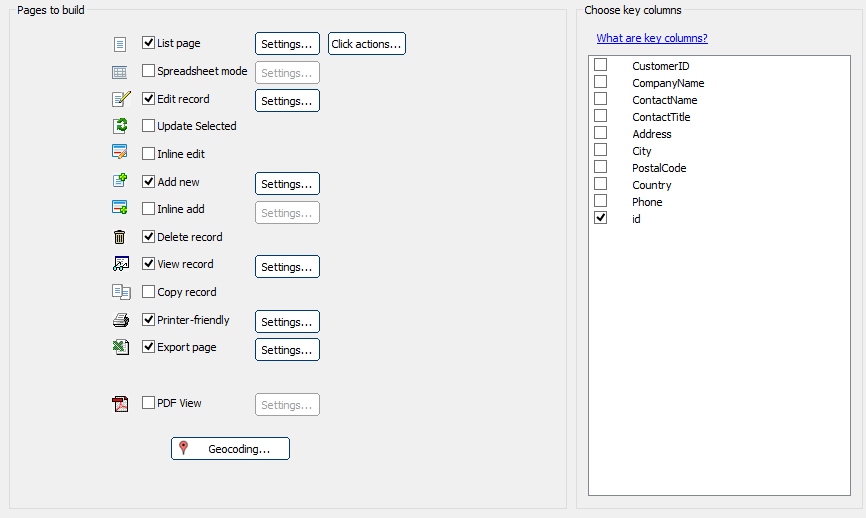
Make sure to include Airtable’s id value. This is the Airtable record ID and is required when you later view, edit or delete an individual record.

Proceed to the Pages screen in PHPRunner or ASPRunner.NET, select id as the key column and enable the pages you need, such as View, Edit, Add and Delete.
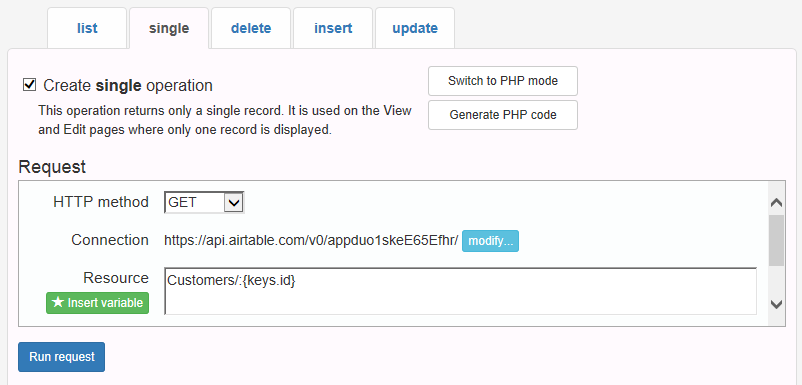
Single record
To retrieve one Airtable record, include its record ID in the resource.
For a table named Customers:
Replace Customers with your own Airtable table name.
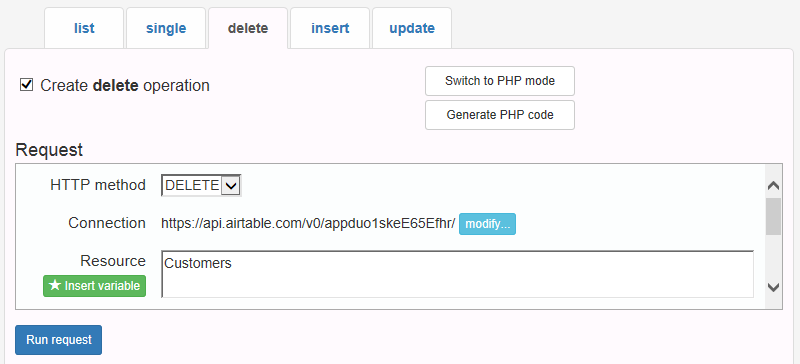
Delete
For the Delete operation, use the HTTP method DELETE and include the Airtable record ID in the resource:
Again, replace Customers with your table name.
Insert
Insert and update operations require a custom JSON request body because Airtable expects field values inside a fields object.
For the Insert operation, set the HTTP method to POST. The resource in this example is:
Click Generate PHP (C#) code and customize the generated request. Replace field names such as ContactName, City and CompanyName with fields from your Airtable table.
PHPRunner PHP code
ASPRunner.NET C# code
Update
Updating a record is similar to inserting one, except that the HTTP method is PATCH and the Airtable record ID is included in the resource.
PHPRunner PHP code
ASPRunner.NET C# code
Troubleshooting
If Airtable returns an authentication or permissions error, check all three parts of the Personal Access Token setup:
- the token has the required read/write scopes;
- the token has access to the Airtable base you are using;
- the Airtable user who created the token has permission to perform the requested operation.
Also verify that the Base ID in the REST API connection and the table name in the resource are correct.
Airtable limits the number of API requests that can be made in a short period of time, so applications that repeatedly poll Airtable should also take API rate limits into account.
For current Airtable authentication information, see the Personal Access Token documentation and the Airtable Web API documentation.
For PHPRunner and ASPRunner.NET configuration details, see the PHPRunner REST API Connections documentation or the ASPRunner.NET REST API Connections documentation.
Hi,
Is the above feature possible with Standard Edition or Enterprise Edition is needed for phprunner to work with airtable.
Good